
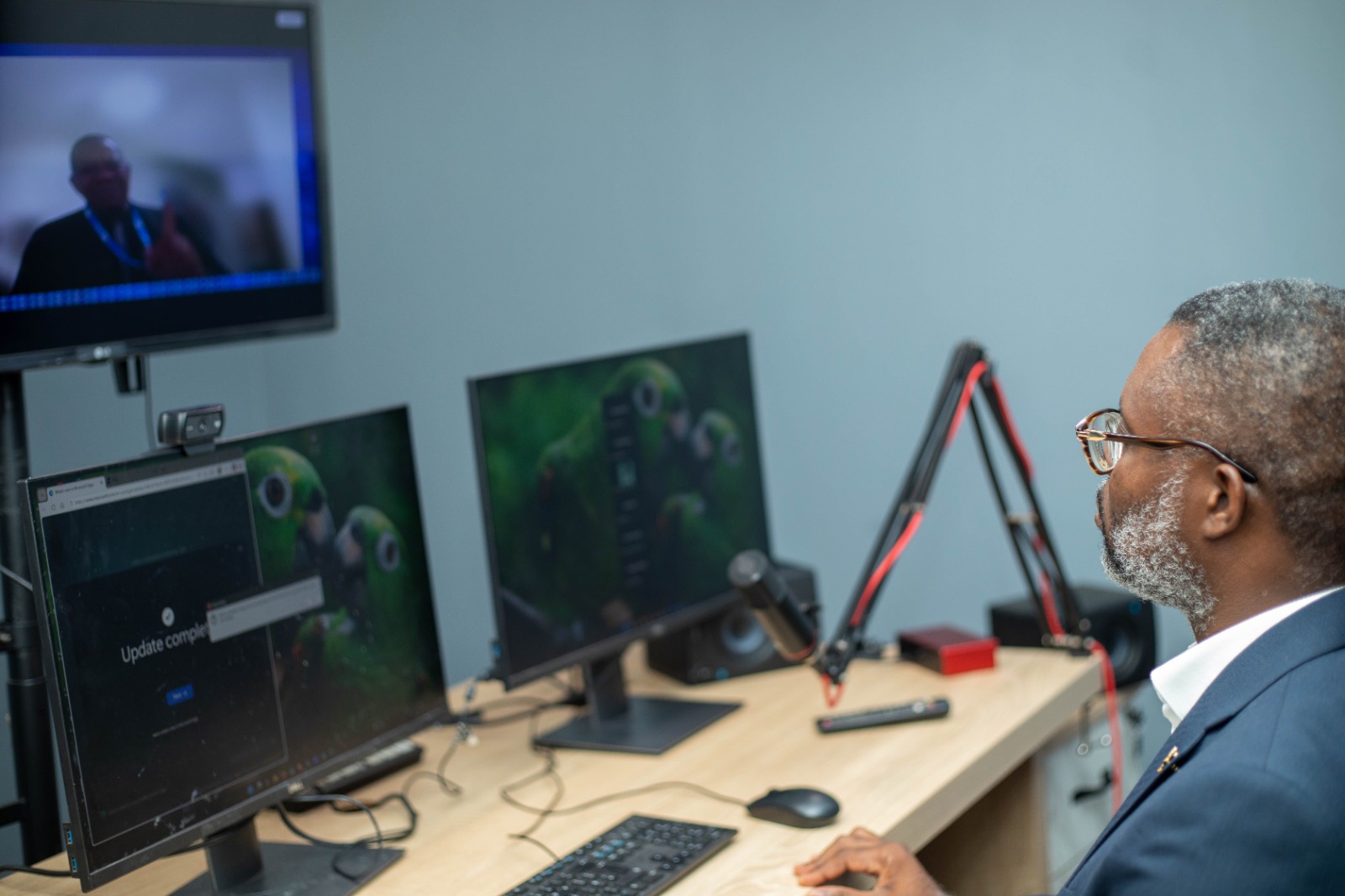
The Kwame Nkrumah University of Science and Technology, Kumasi (KNUST) E-Learning Centre has held a virtual colloquium to mark UNESCO’s International Day for Digital Learning, bringing together academic leaders, policy actors and digital education partners to examine issues of access and ownership in digital learning.
The Dean of the International Programmes Office, Prof. Edmund Ekuadzi, representing the Vice-Chancellor, Prof. Rita Akosua Dickson, said digital education must remain open and accessible.
“Digital learning must not exclude. It must be structured in a way that allows all students to participate and benefit from it,” he said.
He added that universities must respond to global changes in education delivery.
“We cannot ignore the shift to digital systems. Institutions must position themselves to support teaching and learning through these systems,” he said.
The Director of the KNUST E-Learning Centre, Prof. Emmanuel Kofi Akowuah, said the university is working to strengthen its digital systems and expand access.
“Our ambition is to become an international centre of excellence in digital learning. We are building systems that support teaching, learning and research,” he said.
He added that partnerships are key to achieving this goal.
“We cannot do this alone. Collaboration is necessary to improve access and delivery,” he said.
UNESCO Representative to Ghana, Edmond Moukala, said public digital education must remain a priority.
“Digital learning is a public good. Access must be protected, and systems must be inclusive,” he said.
He also called for stronger cooperation between institutions.
“We need partnerships that support innovation and access. This is how we can scale digital learning,” he said.
Other partners contributed to the discussion, including Executive Director of CENDLOS, Prof. Diyawu Mumin, who spoke on national digital learning systems.
Kwesi Atuahene of the Africa Centre for Digital Transformation addressed policy and implementation, while Kwame Nyatuame of the Ghana EdTech Alliance spoke on industry collaboration.
Speakers stressed that technology must support learning outcomes.
“Technology must serve education,” one speaker said. “It must improve how students learn and how teachers deliver content.”
The colloquium was organised in collaboration with UNESCO, CENDLOS, the Africa Centre for Digital Transformation and the Ghana EdTech Alliance. It forms part of efforts to expand digital learning and strengthen partnerships in education.


